Navigator, skipper or captain, whatever we call him, is the man who steers a boat from point A to point B, safely on a certain route that takes into account the weather, dangers or the wishes of the crew. This is not the official definition and I don't think you will find a universally accepted definition, because boat captains come in many varieties and specialisations. From the fishermen of the Danube Delta, who navigate their boats masterfully through shallow water canals, to the captains of 400m long cargo ships, who have to anticipate every manoeuvre well in advance, they all have one thing in common: they have to make decisions based on experience, knowledge and the real situation they find themselves in.
Is driving a boat the same as driving a car?
Many people initially compare driving a boat to driving a car. What could be so different? It just has a bigger steering wheel and instead of pedals it has an accelerator and brake lever. Are there many differences between driving a boat and driving a car? Most definitely, YES. Probably the biggest difference is principle of feedback and practice. Think about how you have perfected the use of your car's brakes. As you've learned more and more how to take corners, you've progressively learned when to take your foot off the accelerator and when and how hard to press the brake. With each new road you travel, the curves are different and you are always faced with a new route, but the variability you have encountered during your learning ensures that you are now ready to brake at the right moment and use the right force in any curve you enter. The conditions for learning this technique are ideal, in fact, sofating a car is a perfect example where you get immediate and unambiguous feedback every time you enter a corner. The result of your action is immediately felt through the reward of a comfortable turn and the punishment of a difficulty in controlling the car if you braked too hard or too lightly.

The situations faced by a maritime pilot handling large ships, or a skipper at the helm of a chartered sailing vessel in a new marina, are, like turning, subject to rules and techniques that can be learned. The major difference is that skill and perfection are much harder to acquire through simple experience of the activity, given the time lag between actions and their visible consequences. In order to acquire intuition-based skills, it is essential to receive quick and quality feedback, as well as sufficient opportunities for practice.
Competence is not a single skill: it is a collection of skills, and the same professional can be an expert in some tasks in his or her field while remaining a novice in others. A captain of a stadium-length transatlantic cargo ship is an expert in handling that ship, but that doesn't mean he'd be as good on a sailboat. In the same way that a Formula 1 racing driver is not as good on a mountain trail, or a surgeon, who may be more proficient in some operations than others.
If we look at chess grandmasters, they become experts when they "have seen it all", when they can quickly assess the situation of a chess board with a simple glance and anticipate many possible scenarios that can evolve from the current situation of the pieces. However, chess is a special case, a regular medium, which is subject to clear and strict rules. Sailing, although based on clear rules, is not such a strict regular environment. Factors such as weather, traffic, technical problems of the boat, peculiarities of each boat or the training and competence of the crew will always vary. Also, many times in sailing unpredictable, spontaneous situations arise that cannot be prevented, but are always taken into account by an expert, as a percentage of the risk to be prepared for. From this point of view, sailing can be likened more to the game of Poker or Bridge, which also offers a regular environment that can sustain mastery.
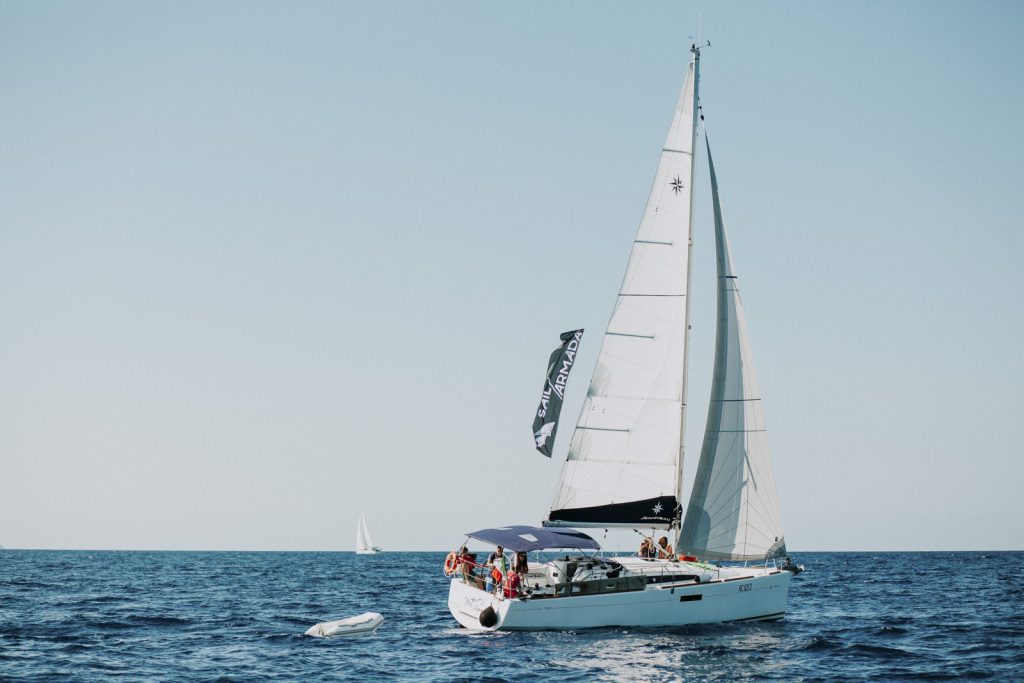
The practical experience of a skipper helps in decision making
And yet, when can we be trusted to make some decisions based on intuition? Is it right to trust the old white-bearded captain who sailed around the world in his 30-foot wooden boat? When intuition can be expertise? Daniel Kahneman, winner of the Nobel Prize for Economics, states in his book "Thinking Fast, Thinking Slow" that in order to gain mastery and be able to rely on intuition in a given field, two conditions must be met:
"- to have a sufficiently regular environment to be predictable
- to have the opportunity to learn these regularities through prolonged practice."
When these conditions are met, intuition is likely to be expert.
In the same book, Daniel K. gives as an example the expertise of a firefighter, with a "sixth sense" of danger, who always manages to get out of a burning house just seconds before the explosion. Of course, these actions may be seen as luck by the uninformed, but in reality they are based on the intuition of a professional, based on many similar situations, theoretical or practical, in which the firefighter has previously found himself. The presentation of fear-provoking situations can also be learned through verbal communication rather than experience. The "sixth sense" firefighter had certainly had many opportunities to discuss and think about types of fires he had not been involved in and rehearse in his mind what the clues might be and how to react.
How does a skipper cope with a crisis situation?
At sea, we can end up in a fire-like crisis situation, where the reaction time and the first decisions we make are vital for the rescue of the crew or the boat. In such situations, an expert's intuition, based on extensive theoretical and practical experience and training, is surely the surest way out of the crisis. Often, only an expert can spot in time subtle signals such as a cloud on the horizon, a succession of waves, a slight vibration felt on deck, an abnormal sound or the mental state of a crew member. These small signals, which always vary and can combine in a multitude of scenarios, can easily be observed by an experienced sailor who is an expert in his field. This captain will always be the one who manages to get the boat into the marina just before the storm starts, or the one who hasn't dragged anchor in a bay where other boats have hit the rocks, or the one who always has a happy crew without suffering from axiety or seasickness, or who has managed to avoid hitting the boat in a small, crowded marina on a windy day. Some decisions are based on intuition, but this intuition cannot be one you can trust unless it is based on lots of practical and theoretical training where you can get feedback as quickly as possible on your actions in different situations.
This concept is the basis of our practical sailing courses for charter skippers. We have chosen a narrow field of sailing, in which we provide a regulated and safe framework in which you can practice as many real sailing situations as possible and at the same time receive immediate feedback on your decisions and manoeuvres. Often, in the courses, learners learn faster and more from a mistake that the trainers intentionally let them make, in a controlled environment, without putting the boat at risk, to receive instant feedback on their action and intuitively understand what they did wrong. As with the firefighter, a skipper who has experienced a situation where they felt in danger will analyse and learn how to react most effectively in a similar situation.

Another important quality of experts in a given field is the correct risk assessment and preparedness to deal with a given event. It is very easy to be tempted with experience to believe that we can successfully accomplish an impossible or too risky task. In such totally unpredictable situations, success is not due to correct intuition, but at best to luck or lies. If you find this conclusion surprising, you probably still regard intuition as magic.
It is good to be reserved about the predictions of an "expert" skipper with no experience of the environment in which he operates. This environment, in the case of sailing, can vary enormously from one geographical area to another, from one type of boat to another, from a beautiful day with mirror water to one with strong winds and 5m waves and not least from a trained crew or a crew made up of families with children who have stepped on a boat for the first time. A real expert knows how to assess all these factors, like a professional chess player, predict 4-5 moves in advance and make decisions to reduce any risk.
Most of the time, the skipper who has had the chance to learn the rules of the environment well enough, to be familiar enough with the area, the boat and the crew, will make decisions using associative thinking, based on intuition, recognizing similar situations and generating quick and accurate predictions and decisions.